A drop-in animation replacement for Titanium. This module’s aim is to mimick as much of the Titanium animation module as possible with the addition of new timing functions and better performance. As of right now the only properties that can be animated are: rotate, transform, top, bottom, left, right, width, height, opacity, color and backgroundColor. The transform property is not supported at this time.
If you are animating views that don’t contain any sort of transparency you will see performance gains when animating large or otherwise complex view groups.
If you need to perform a rotation you can pass the rotate property which accepts a float. The rotate property is the angle you wish to rotate to; A positive value will result in a counter-clockwise rotation, while a negative value will result in a clockwise rotation.
Once a rotation has been performed subsequent rotations will be performed from its last rotation angle. To simplify multiple rotations you can pass values > 360. For example to do two complete rotations you can pass a value of 720.
Layout Support
When animating a complex layout (such as a vertical layout inside a vertical layout) it may be necessary to specify which parent to propogate the animimations from, you can do this by setting parentForAnimation and passing the proxy that holds the views that should animate. This is especially useful in cases where you are animating inside of a Ti.UI.ScrollView.
Easing Functions
The below easing functions can be accessed as you would any other Titanium constant. Assuming the above usage example you can access all of these by passing the below name to the module, such as in: Animator.ELASTIC_IN_OUT
Note : All the Rendered Juypter Notebooks(in nbviewer) for better view are availabe by clicking on the links embedded below. Also some links might not work so you can direcly click here and paste the link of the notebook you want to render
DNA Sequencing is the process of determining the nucleic acid sequence – the order of nucleotides in DNA. It includes any method or technology that is used to determine the order of the four bases: Adenine(A), Guanine(G), Cytosine(C), and Thymine(T).
DNA Sequencing may be used to determine the sequence of individual genes, larger genetic regions (i.e. clusters of genes or operons), full chromosomes, or entire genomes of any organism. DNA sequencing is also the most efficient way to indirectly sequence RNA or proteins.
Read Alignment Algorithms Covered :
Online Algorithms:
The algorithm in which the text ‘T’ (in our case the reference genome) is not pre-processed, and it doesn’t matter if the pattern ‘P’ is pre-processed or not.
We use the term k-mer to refer to a substring of length k. For each offset that the index reports back, that’s called an index hit. When P matches within T, we’ve been calling that a match, or an occurrence. But, an index hit may or may not correspond to a match, it’s just a hint that we should look harder in that particular region of T. So, not all index hits lead to matches, because we don’t know whether the rest of P matches where it should within T. We have to do more character comparisons. And, this additional work that we do is called verification.
This kind of data structure is called a multimap. It’s a map because it associates keys, k-mers, in this case with values, offsets in the genome. And it’s a multimap because a k-mer may be associated with many different offsets in the genome.
In mathematics, a subsequence is a sequence that can be derived from another sequence by deleting some or no elements without changing the order of the remaining elements.
Need for Approximate Matching Algorithms :
We need algorithms that can do approximate matching. Allowing for differences between the pattern and the text. One of the reason we might expect differences between the read and the reference is because of sequencing errors. Sometimes the sequencer will make mistakes. It will miscall a base in the sequencing read. And when that happens, that base might no longer match the reference genome.
We want to be able to talk about the distance between two strings. In other words, we want to be able to describe how different they are, how many differences there are. But we have to define exactly what we mean by distance.
So the first kind of distance we’ll define is called Hamming Distance. So if you have two strings, X & Y, that are of the same length, we can define the hamming distance between X and Y as the minimal number of substitutions we need to make to turn one of the strings into the other.
Another is Edit Distance(AKA levenshtein Distance) between two strings equals the minimal number of edits required to turn one string into the other. Where a single edit could be a substitution, or it could be an insertion or a deletion. (In this case X & Y could be of different length)
Approximate Matching Algorithm using Pigeonhole Principle (and Boyer Moore) : The Pigeonhole Principle states that if items are put into containers, with, then at least one container must contain more than one item. In our case we will split pattern ‘P’ (k+1) times when we are looking for an approximate match of upto ‘k’ mismatches, that means even if we have ‘k’ mismatches in ‘k’ partitions of pattern ‘P’, still there will be atleast one partition which will exactly match with the reference genome, which we can later confirm by verification as stated in indexing techiques.
Global Alignment: Calculating a global alignment is a form of global optimization that “forces” the alignment to span the entire length of all query sequences. By contrast, local alignments identify regions of similarity within long sequences that are often widely divergent overall. An attempt is made to align the entire sequence (end to end alignment) Finds local regions with the highest level of similarity between the two sequences. A global alignment contains all letters from both the query and target sequences. It penalises the Substitution/ Insertion/ Deletion differently than editDistance.
Overlaps: Overlap–layout–consensus genome assembly algorithm: Reads are provided to the algorithm. Overlapping regions are identified. Each read is graphed as a node and the overlaps are represented as edges joining the two nodes involved. The algorithm determines the best path through the graph (Hamiltonian path).
Shortest Common Superstring: A shortest common supersequence (SCS) is a common supersequence of minimal length. In the shortest common supersequence problem, two sequences X and Y are given, and the task is to find a shortest possible common supersequence of these sequences.
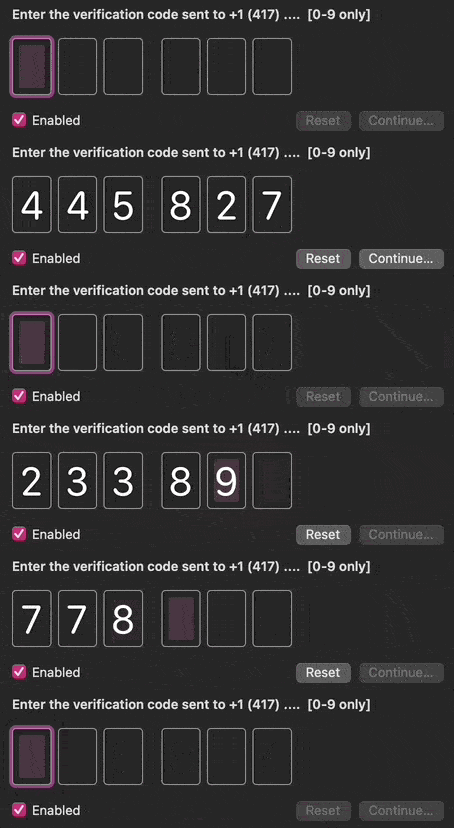
A passcode entry field for macOS similar to Apple’s two-factor authentication field.
About
The control is made up of multiple groups of passcode ‘cells’. Each cell holds a single ‘character’, and you define groups of cells using a group separator. The pattern you define provides the layout — containing # for a passcode cell and - for a group separator.
For example, to create a passcode of six characters split evenly into two groups of three cells, you set the passcode pattern to "###-###"
The font to use when displaying the character in a cell
padding (CGSize)
The padding to use between the character and the edge of its cell
edgeInsets (NSEdgeInsets)
The padding to use between the cells and the bounds of the control
isEnabled (Bool)
Enable or disable the control (observable)
Validations
There are two methods of validation
allowableCharacters (String)
This settings on the control allows you to specify a string containing the characters that are allowed within the control. By default, this is 0123456789.
characterValidatorBlock
For more complex validations, you can specify a callback block which can be used to validate each character
It takes a string element and returns either a value transformed string element (for example, uppercased), or nil if the presented character isn’t valid for the control.
// A validator block which allows numbers and case-insensitive A-F characters
self.passcode.characterValidatorBlock ={ element inletvalidChars="0123456789ABCDEF"lets= element.uppercased() // Always check against uppercase
if validChars.contains(s){ // If the validChars contains the uppercased char...
return s.first // ... return the uppercased version
}returnnil // Unsupported char, ignore by returning nil
}
Values
You can bind to these member variables to receive updates as the control content changes.
isValidPasscode (Bool)
Is the passcode entered a valid passcode (ie. all the values are specified)
isEmpty (Bool)
Are there no values specified yet
passcodeValue (String)
If the passcode is valid, the passcode value as a string, otherwise nil.
Delegate (DSFPasscodeViewHandling)
You can attach a delegate to receive messages back from the view if binding is not your thing.
Called when the content of the passcode view changes.
func passcodeView(
_ view:DSFPasscodeView, // The passcode view
updatedPasscodeValue passcode:String) // The valid passcode as a string of characters
Called ONLY when the passcode is valid and complete.
func passcodeView(
_ view:DSFPasscodeView, // The passcode view
didTryInvalidCharacter invalidChar:String?, // The invalid character, or nil for a special key
atIndex index:Int) // The passcode cell index where the attempt failed
Called if the user presses an unsupported character or key in a passcode cell.
Known issues
Xcode has been broken for many years regarding support for @IBDesignable/@IBInspectable. Whilst this control provides support, Xcode’s support for @IBDesignable for a control provided from a package is completely broken.
If you copy the DSFPasscodeView source files directly into your project the Designables work as expected (FB8358478).
License
MIT. Use it and abuse it for anything you want, just attribute my work. Let me know if you do use it somewhere, I’d love to hear about it!
MIT License

Copyright (c) 2021 Darren Ford

Permission is hereby granted, free of charge, to any person obtaining a copy
of this software and associated documentation files (the "Software"), to deal
in the Software without restriction, including without limitation the rights
to use, copy, modify, merge, publish, distribute, sublicense, and/or sell
copies of the Software, and to permit persons to whom the Software is
furnished to do so, subject to the following conditions:

The above copyright notice and this permission notice shall be included in all
copies or substantial portions of the Software.

THE SOFTWARE IS PROVIDED "AS IS", WITHOUT WARRANTY OF ANY KIND, EXPRESS OR
IMPLIED, INCLUDING BUT NOT LIMITED TO THE WARRANTIES OF MERCHANTABILITY,
FITNESS FOR A PARTICULAR PURPOSE AND NONINFRINGEMENT. IN NO EVENT SHALL THE
AUTHORS OR COPYRIGHT HOLDERS BE LIABLE FOR ANY CLAIM, DAMAGES OR OTHER
LIABILITY, WHETHER IN AN ACTION OF CONTRACT, TORT OR OTHERWISE, ARISING FROM,
OUT OF OR IN CONNECTION WITH THE SOFTWARE OR THE USE OR OTHER DEALINGS IN THE
SOFTWARE.
Secure.py – secure.py 🔒 is a lightweight package that adds optional security headers and cookie attributes for Python web frameworks.
Flask-HTTPAuth – Simple extension that provides Basic, Digest and Token HTTP authentication for Flask routes.
Flask Talisman – Talisman is a small Flask extension that handles setting HTTP headers that can help protect against a few common web application security issues.
Django deployment checklist – Web framework Django has built-in feature to check for security configurations: run this command manage.py check --deploy. It’s really helpful as it already included in the framework.
EvilTwinFramework – A framework for pentesters that facilitates evil twin attacks as well as exploiting other wifi vulnerabilities.
sqlmap – Automatic SQL injection and database takeover tool
Cryptography
Passlib – Secure password storage/hashing library, very high level.
PyNacl – Python binding to the Networking and Cryptography (NaCl) library.
Application Templates
wemake-django-template – Bleeding edge django template focused on code quality and security.
Educational
Hacking Playground
Let’s be bad Guys – Shiny, Let’s Be Bad Guys: Exploiting and Mitigating the Top 10 Web App Vulnerabilities.
django.nV – django.nV is a purposefully vulnerable Django application provided by nVisium.
DSVW – Damn Small Vulnerable Web (DSVW) is a deliberately vulnerable web application written in under 100 lines of code, created for educational purposes.
DVPWA – Damn Vulnerable Python Web Application was inspired by famous dvwa project and bobby-tables xkcd comics.
OWASP Python Security – Aims at creating a hardened version of python that makes it easier for developers to write applications more resilient to attacks and manipulations.
Django Security – Overview of Django’s security features includes advice on securing a Django-powered site.
Companies
GuardRails – A GitHub App that gives you instant security feedback in your Pull Requests.
Snyk – A developer-first solution that automates finding & fixing known vulnerabilities in your dependencies.
Found an awesome project, package, article, or another type of resources related to Python Security? Send me a pull request!
Just follow the guidelines. Thank you!
Engineering,BCA,B.Com,M.Com,Mca notes For All University
notes4free(http://notes4free.in/)
notes4free this platform, Students can get all kinds of notes for courses such as Vtu Engineering(CBCS and Non-CBCS), b.com, BCA, mca, b.tech, etc. and students can also get regular semester projects based on web development and other domain projects, including all types of software projects. Model paper and question paper from the previous year are also available to help the students score more.
Engineering Notes
Notes4free provides all department notes under new scheme and syllabus of VTU CBCS & Non-CBCS Engineering notes and that is mainly intended for students who are studying under the new CBCS and Non-CBCS VTU scheme. Often we update more VTU CBCS scheme notes of all departments of engineering including study materials. To download please click here.http://notes4free.in/
BCA
notes4free offers BCA departmental notes for the students studying in the new BCA Scheme and the 3-year curriculum from the first sem to the sem of BCA. We frequently add more BCA notes and study materials on a regular basis. To download, click here http://notes4free.in/
B.Com
Notes4free offers B.Com notes and this is given under the new B.Com scheme and curriculum. We add more B.com notes and study materials on a regular basis. To download, click here.http://notes4free.in/
M.Com
Notes4free provides M.com department notes and this is provided to students studying under the new M.Com scheme and syllabus. More M.Com notes and study materials are added regularly. To download, click here.http://notes4free.in/
Vtu Engineering software projects
VTU software projects based on python, web-based development, graphics design, and other software where you pay for certain projects, and some are not paid means its free to download. if you have an error during the execution of the projects then you must contact the admin on the contact page or in live chat to admin. And for enquires for any projects, you can join and register in a live chat with proper email and contact to admin@gmail.com
notes4free provides bca notes and this are given to students studying under bca of all semester. We regularly add more bca notes and study materials choose the department and semester of the notes and click download to download the notes.
B.Com NOTES FOR ALL YEAR
notes4free provides B.Com notes and this are given to students studying under B.Com of all semester. We regularly add more B.Com notes and study materials choose the department and semester of the notes and click download to download the notes http://notes4free.in/bcom-notes.html
M.Com NOTES FOR ALL BRANCHES | M.Com Specialisations
notes4free provides M.Com department notes and this are given to students studying under the new scheme and syllabus. We regularly add more SCHEME M.com department notes and study materials choose the department and semester of the notes and click download to download the notes. http://notes4free.in/mcom-notes.html
contact us
For any queries, please feel free to contact us, and if any student needs notes tell us and we’ll add notes to notes4free. http://notes4free.in/contact.html
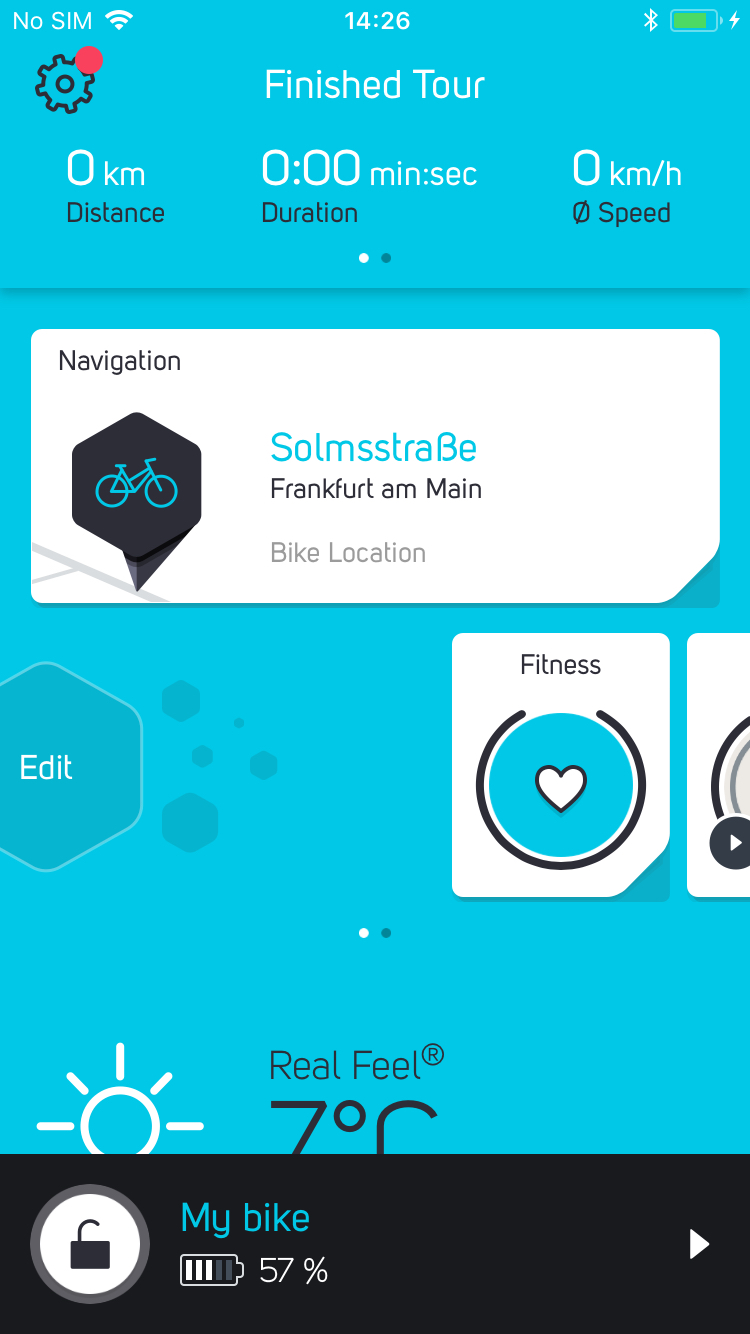
A collection of Open Source components to develop modules for COBI.Bike – the perfect fusion of smartphone and bike.
💡 Interactive Demo: Learn the fundamentals
The quickest way to learn the DevKit basics without writing any code.
Change location coordinates and hit thumb controller buttons to see COBI.js in action. This simulates data and interaction events that will later be provided by the COBI.Bike system when riding a bike. Bonus points for directly tweaking the code e.g. subscribing to additional data from the COBI.js data stream.
🚀 Let’s get started with your first project
It only takes a few lines of javascript to turn Web Apps into a module:
Step 1: Add boilerplate code
To get your Web App ready just add COBI.js at the end of the body section of your HTML:
and pass an authentication token to the COBI.init function before subscribing to the data stream.
Tokens are not issued yet, so you can use any string for now:
// Authenticate your moduleCOBI.init('token — can be anything right now')
It’s that easy: Any Web App + COBI.js = Module!
Step 2: Hook into the data stream
Enough with the boilerplate code, let’s make our new module respond to the handlebar remote control:
COBI.hub.externalInterfaceAction.subscribe(function(action){console.log('I just tapped the handlebar remote and instantly received this '+action+' in my Web App');});
or visualize the cadence acquired by COBI.Bike app from an external Bluetooth sensor or e-bike motor:
COBI.rideService.cadence.subscribe(function(cadence){console.log('Your current cadence is '+cadence+' rpm.');});
There is a ton of data available such as current speed, course, heart-rate (if heart-rate monitor is connected), power, calories burned and much more. Our COBI.js reference will be your friend.
🔬 Test your module
Now that you have supercharged your Web App, you can test your module either in the Chrome browser on your machine or directly in the COBI.Bike iOS App on your bike.
Browser testing
Just install the DevKit Simulator Chrome Extension, open up the Developer Tools (⌘ + Option + i / Ctrl + Shift + j) and select the »COBI.Bike« tab.
To get the best experience, switch on the phone mode in the upper left corner and rotate the device to landscape.
To simulate riding and fitness data you can play back one of our sample cobitrack or GPX files.
On-bike testing
If you don’t own a COBI.Bike yet, apply for a hardware development kit at cobi.bike/devkit or purchase one at get.cobi.bike. Afterwards, register as a developer to test your module on your bike.
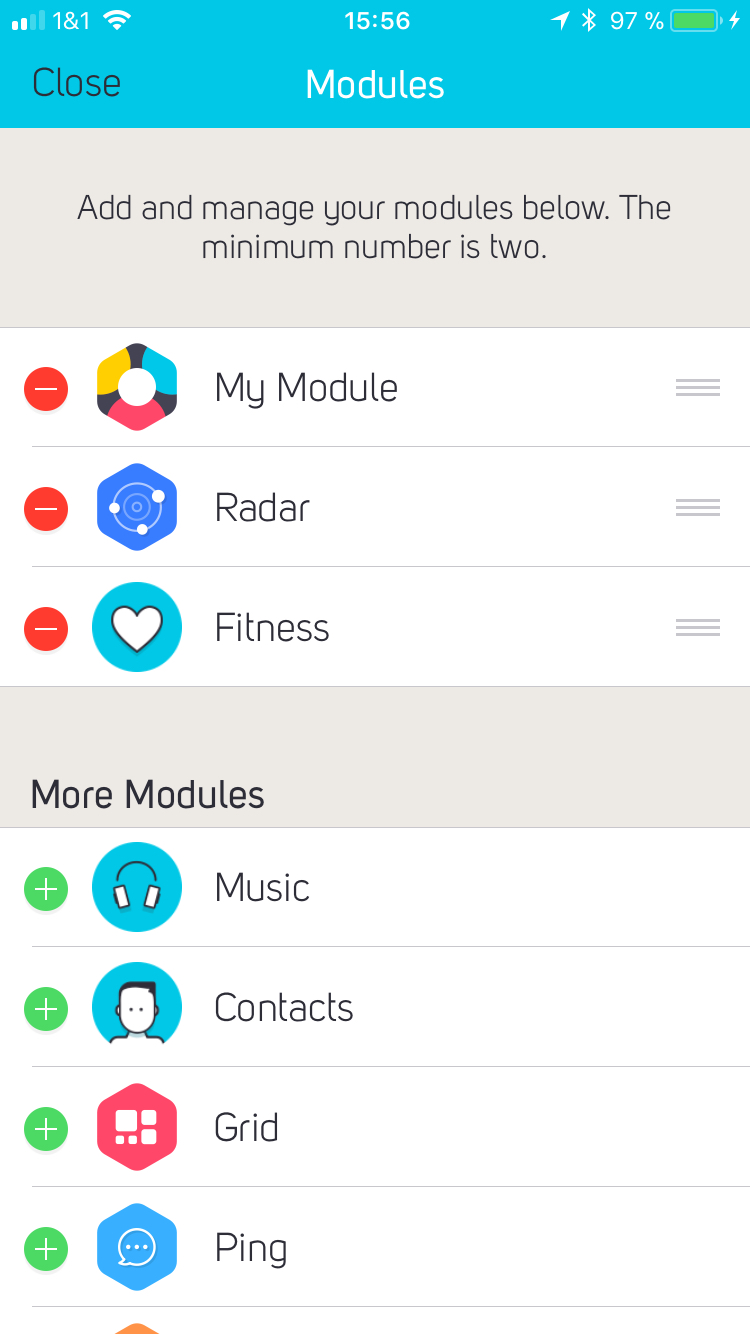
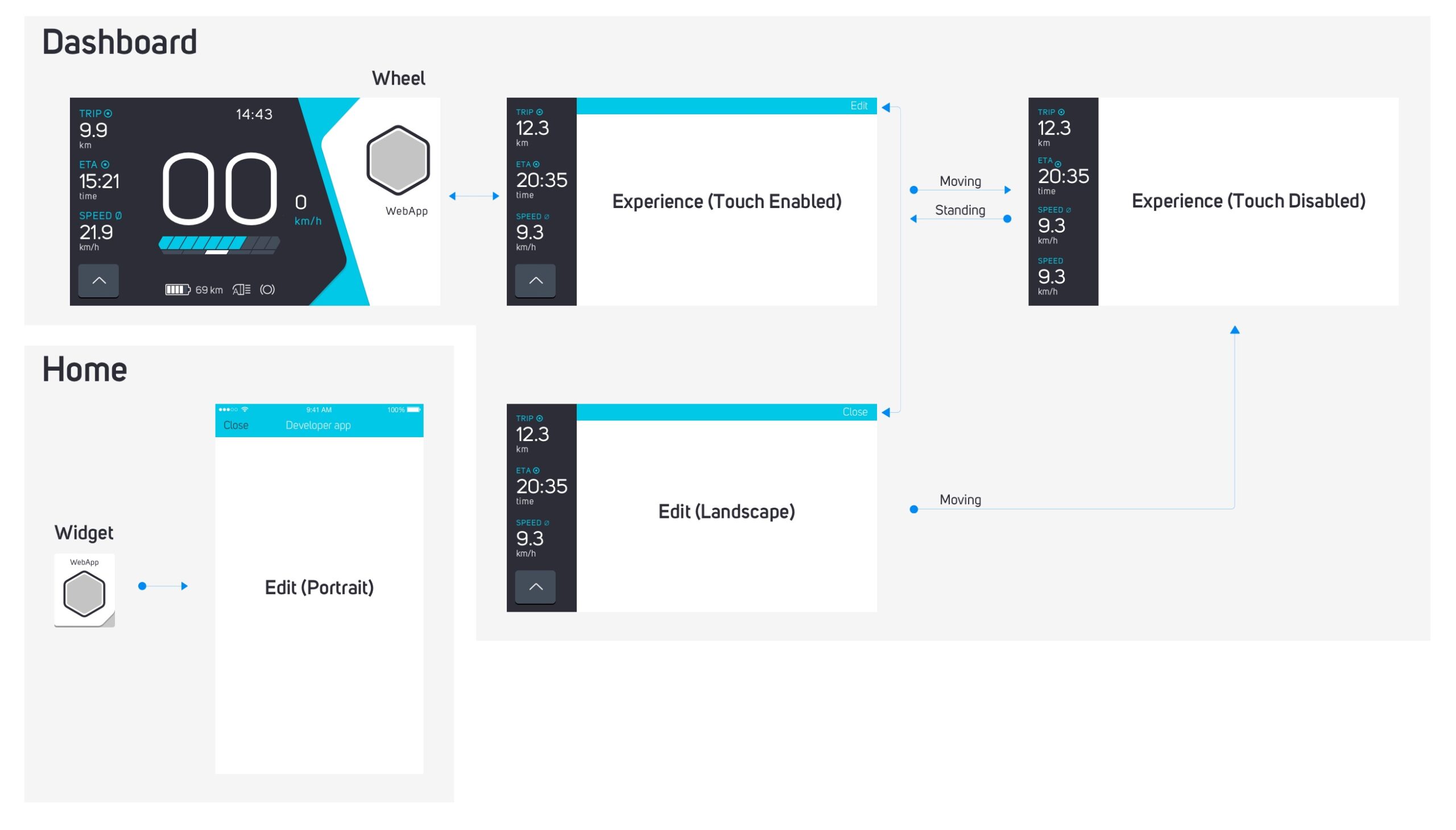
Ready? Then open up the COBI.Bike app on your iPhone and open the edit modules screen. As developer you can now choose from a number of examples modules or add you own via »My Module«
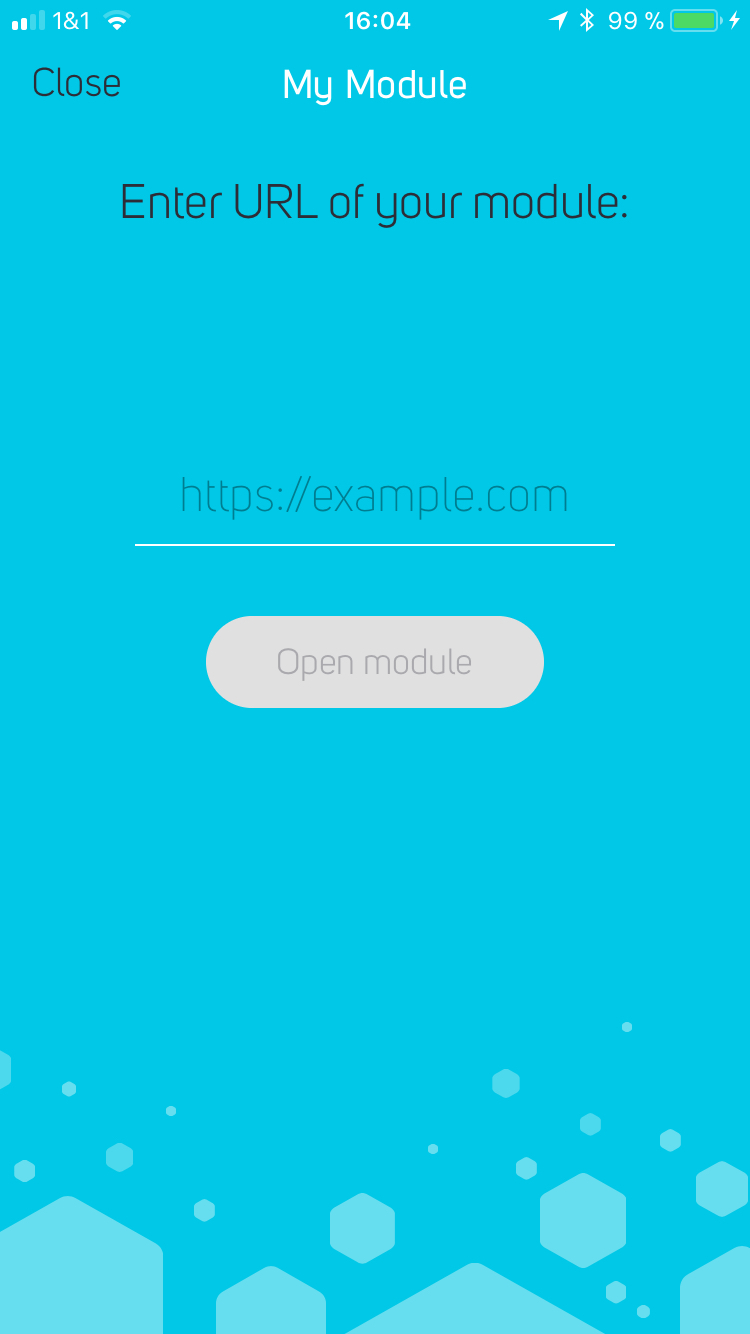
When you open »My Module« on the home screen or the dashboard, you can enter the URL of your module (it can be hosted wherever you want, but we have some suggestions below). When you press »Open module« your module is loaded and hooked up to the app. Now you can easily test your idea on your 🚲.
🏓 Play ping-pong with the COBI.Bike app
Take advantage of interfaces to the native COBI.Bike app to save yourself a lot of work.
There are 4 contexts you should support. You can check COBI.parameters.context() at any time to decide if some sort of settings should be shown (COBI.context.onRideSettings or COBI.context.offRideSettings) or if the actual module is requested (COBI.context.onRide or COBI.context.offRide). To share information between the two contexts and in between user sessions use the web standard Local Storage.
Touch Interaction Changes
While riding, the user is encouraged to use the thumb controller instead of interacting with the UI via touch. Subscribe to changes of this value to make the best out of both situations. Please note that a bar is shown at the top while touchInteractionEnabled is false — make sure it is not overlapping with your UI.
COBI.app.touchInteractionEnabled.subscribe(function(enabled){// Adapt your UI});
🌈 Everything else about the DevKit
Debugging Tips & Tricks
For seing javascript errors in the native App, activate the “Show module errors” option in the “Diagnostics” section
To get better error messages when interacting with the COBI.js API, include https://cdn.cobi.bike/cobi.js/0.44.0/cobi.dev.js instead of the script mentioned above (please note: the dev version is considerably larger which has a big impact on the loading time)
To show a native dialog when running inside the iOS App, just use a normal alert("your messages") (only for debugging)
When developing in Chrome, use the phone button in the upper left corner of the Chrome Developer Tools and rotate it to landscape to see how it looks while riding
When using the Chrome Simulator, press the Print state to console button to print the current COBI.js state to the Chrome Developer Tools Console
To change the current context append ?context=onRide or your desired context to your URL in the browser.
Read our Interface Guidelines to understand the unique challenges of developing software for bikes and to learn more about how the COBI.Bike system and modules work.
Warning
The Cartographer upstream project is not actively developed anymore. As a consequence, this package has been archived. Check out the https://github.com/kadras-io/supply-chains package from the Kadras Engineering Platform as an alternative.
A Carvel package for Cartographer, a cloud-native framework to build paved paths to production on Kubernetes.
Installation without package repository
The recommended way of installing the Cartographer package is via the Kadras package repository. If you prefer not using the repository, you can add the package definition directly using kapp or kubectl.
Note
You can find the ${VERSION} value by retrieving the list of package versions available in the Kadras package repository installed on your cluster.
kctrl package available list -p cartographer.packages.kadras.io -n kadras-packages
Verify the installed packages and their status:
kctrl package installed list -n kadras-packages
📙 Documentation
Documentation, tutorials and examples for this package are available in the docs folder.
For documentation specific to Cartographer, check out cartographer.sh.
🎯 Configuration
The Cartographer package can be customized via a values.yml file.